



Persian vs. Oriental Rugs: Which Fits Your Home? | GetMyRugs

Persian Rugs vs. Oriental Rugs: Which One Belongs in Your Home?
If you've ever stood in front of a beautifully patterned rug and wondered whether to call it "Persian" or "Oriental," you're not alone. The two words get used interchangeably all the time, and honestly, it's easy to see why. Both bring the same things into a room: warmth, history, and a pattern that feels like it's been quietly telling stories for a hundred years.
But they're not quite the same thing. Once you know the difference, shopping for one becomes so much easier, and a little more special too. Let's settle it gently, room by room, so you can choose the rug that feels most like yours.
What Makes a Rug "Persian"
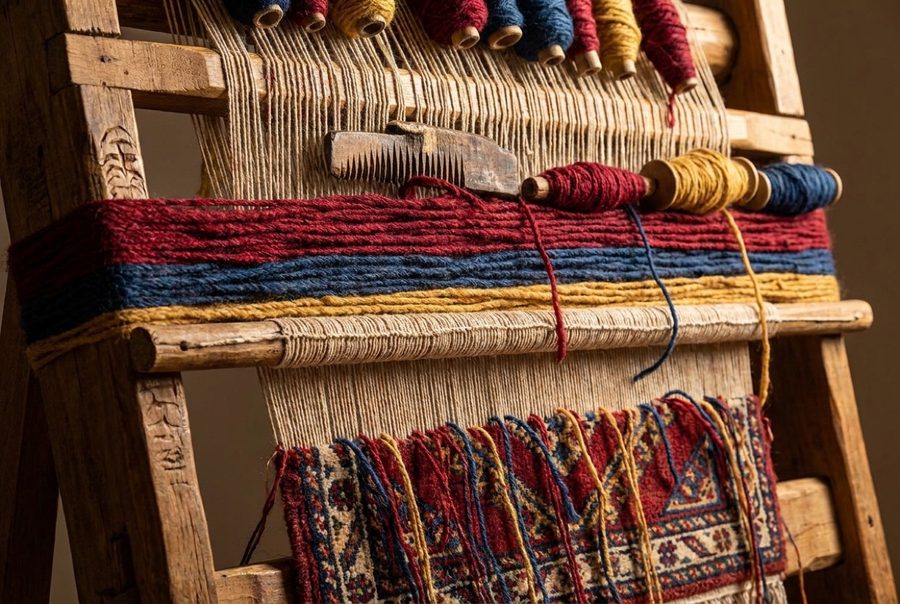
A Persian rug, strictly speaking, is a rug woven in the tradition of Iran (called Persia before 1935) - hand-knotted in wool or silk, often with curving vines, palmettes, and a central medallion that pulls your eye to the middle of the room. Whether you're browsing a Persian carpet for a formal dining room or a softer Persian area for a quiet reading corner, the tradition behind it is the same patient, knot-by-knot craft.
What makes Persian design so recognizable is its place. Different weaving cities in Iran each developed their own signature look:
- Isfahan rugs are fine, formal, and densely detailed, often on a soft ivory or pale ground.
- Tabriz rugs favor intricate medallions and a slightly firmer hand, one of the oldest continuous weaving traditions in the world.
- Kashan rugs lean toward deep reds and blues with elegant, curling floral vines.
- Heriz rugs are bolder and more geometric than the others, with a rustic, architectural feel.
You don't need to memorize any of this to love a Persian rug. But it's a nice thing to know: when you buy one, you're buying a place, not just a pattern.
What Makes a Rug "Oriental"
Here's the part that clears up most of the confusion: "Oriental" isn't a place at all. It's an umbrella term for hand-knotted rugs from a whole swath of Asia, covering Persian rugs, but also Turkish, Caucasian, Chinese, and Central Asian weaving traditions. Whether someone calls it an oriental rug, an oriental carpet, or describes a whole room full of oriental carpets and rugs, they're all pointing at this same broad family.
So every Persian rug is technically an oriental rug but not every oriental rug is Persian. A Turkish rug, for instance, tends to use more symmetrical knots and bolder, more geometric motifs than the flowing curves of Persian design. Both fall under the "oriental" umbrella; they just come from different looms and different hands. Shoppers searching for oriental carpet rugs are often really looking for this exact wider category - a whole world of regional weaving traditions, not one single look.
Think of it this way: "oriental" is the family, and "Persian" is one of its most famous members.
How to Tell Them Apart at a Glance
You don't need an appraiser's eye to spot a few tells:
- Motifs. Persian designs lean toward curving florals, vines, and a clear central medallion. Other oriental traditions - especially Turkish and Caucasian - favor bolder, more angular geometric patterns.
- Color depth. Persian rugs often use deep, saturated reds, blues, and ivories built up through natural dyes. Oriental rugs from other regions can run brighter or more contrasting.
- The knot. Persian rugs are traditionally tied with an asymmetrical knot; many other oriental traditions, Turkish included, use a symmetrical one. This is a technical detail, but it's part of why hand knotted persian rugs have such a distinct texture underfoot, and why hand knotted oriental rugs more broadly hold their shape and pattern for decades.
- The story on the tag. Reputable sellers will usually tell you the region, not just "oriental." If a rug is genuinely Persian, that's worth saying and worth paying a little more for.
Explore the Best Sellers of Both
If the distinctions above are interesting but you'd rather just see what other households are actually choosing, that's a completely reasonable way to shop too. We keep both collections sorted by what's genuinely selling, so you can browse with real signal rather than guessing.
Head to our best-selling Persian rugs to see which Persian carpet and Persian area designs other customers keep returning to usually rich, traditional medallion patterns in wool, chosen by people furnishing a formal living room or dining room they plan to keep for years.
Or browse our best-selling oriental rugs to see which oriental carpets and oriental carpet rugs are earning repeat love right now - often bolder Turkish and Caucasian-influenced motifs, picked by shoppers who want that same hand-knotted heritage in a slightly more graphic, less formal register.
It's also worth checking our current best-selling rugs on sale, before you commit either way - genuinely hand-knotted Persian and oriental rugs occasionally show up there at a friendlier price, and it only takes a minute to check whether your favorite pattern happens to be discounted this week.
Vintage, Antique, and Everything In Between
Part of what makes both categories so beloved is age. A true vintage rug - generally 20 to 99 years old - carries a soft, lived-in patina that new rugs simply can't fake. Anything 100 years or older earns the word antique rug, and both terms apply just as often to oriental rugs as they do to Persian ones.
You don't have to buy vintage to get that feeling, though. A well-made new hand-knotted rug, cared for gently, becomes the vintage rug of someone else's home in 30 years. That's the quiet, comforting part of buying handmade: you're starting a story, not just finishing a purchase.
So, Which One Should You Buy?
Here's the honest, comforting truth: you can't go wrong with either, because both are made by the same patient hands, using the same ancient knot-by-knot technique. The real question is which feeling you want in your room.
Choose a Persian rug if...
- You're drawn to soft, curving florals and a central medallion that anchors the whole room
- You love the idea of a specific place - Isfahan, Tabriz, Kashan, Heriz - woven into your floor
- You want the classic look most people picture when they imagine a "fine rug"
Choose a wider oriental design if...
- You're drawn to bolder, more geometric motifs and a slightly more rustic, storied feel
- You like the idea of a design tradition rather than one single region
- You want something that pairs a little more easily with eclectic or global-inspired rooms
It's worth saying plainly: neither choice is the "safer" one, and plenty of beautiful homes mix both freely rather than picking a side. A formal Persian carpet in the dining room and a bolder oriental piece in a den or home office is a completely natural way to let both traditions live under one roof, each doing the job it does best in the room it suits most.
Either way, look for a hand knotted rug - the knot is what gives both traditions their decades-long lifespan, and it's the detail that turns a rug from decoration into heirloom.
A Few Honest Questions We Hear Often
Is a Persian rug always more valuable than an oriental rug from elsewhere? Not automatically. Value comes down to knot density, material, dye quality, and condition far more than region alone. A finely made Turkish or Caucasian oriental rug can hold its value just as well as a modest Persian piece - the "Persian" name carries prestige, but it's not a shortcut past everything else that makes a rug genuinely fine.
Can I tell an iranian carpet from a Turkish one just by the pattern? Often, yes, with practice - curving florals and a central medallion usually point to Iran, while bolder, more symmetrical geometric motifs usually point to Turkey or the Caucasus. But regional weaving traditions have influenced each other for centuries, so the honest answer is that a knowledgeable seller telling you the specific origin matters more than guessing from the pattern alone.
Do I need to know all the regional names - Isfahan, Tabriz, Kashan to shop confidently? Not at all. They're wonderful to know once you're curious, but plenty of happy homes have a beloved Persian or oriental rug bought purely because it felt right, with the history discovered afterward as a nice bonus rather than a prerequisite.
Bringing One Home
At GetMyRugs, our Persian rug collection and oriental rug collection are both hand-knotted by the same weaving families we've worked with for generations, using wool sourced and spun the traditional way. You can browse by color and size to find the one that fits your room, and every piece ships free with easy 30-day returns while you make sure it's the one.
Once it's home, a little regular care keeps either style beautiful for decades — our rug care guide walks through exactly how.
Shop Persian rugs → | Shop oriental rugs →
Or start with what's already proven itself: Best-selling Persian rugs → | Best-selling oriental rugs →
Whichever you choose, it comes with a story already woven in. All you have to do is add the next chapter.
Keep reading
Find your perfect handmade rug
Over a thousand hand-knotted wool, silk and jute rugs — shipped free across the US, with free 30-day returns.
Shop all rugs