




Kitchen Rugs: Stylish & Easy to Clean | GetMyRugs

Stylish and Easy to Clean
A kitchen rug lives a harder life than almost any other rug in your home. It catches dropped sauce, gets walked across in wet socks, and sits directly beneath where you're standing for the better part of every meal you cook. So it's fair to want two things from a kitchen rug at once: something that genuinely looks good, and something that doesn't fall apart the first time something spills.
The good news is you don't have to choose. At GetMyRugs, we hear this exact dilemma from customers all the time, so here's an honest, practical guide to picking a kitchen rug or a kitchen rug runner that does both.
What Actually Makes a Kitchen Rug Work
Before getting into style, it's worth being clear about what genuinely matters for this specific room, since it's different from almost anywhere else in your home.
Pile height is the single biggest factor. A low, tight pile lets you sweep or vacuum away crumbs easily and doesn't trap debris the way a deeper, plusher pile can. If you've ever tried to get flour out of a thick shag rug, you already understand why pile height matters more here than color or pattern. This is also why we'd generally steer you away from an especially plush design for this specific room, however tempting it looks in a photo - save that construction for a bedroom or a living room that sees gentler daily use. Our best-selling kitchen rugs lean heavily toward exactly this lower-pile territory, for precisely this reason.
Color that hides everyday wear matters more than you'd think. A solid pale rug shows every coffee drip; a richer color or a busier pattern disguises the same spill far more forgivingly. This isn't about avoiding light colors entirely - it's about knowing they'll ask for more frequent cleaning.
Non-slip backing matters more here than in a living room. Kitchen floors are often tile, wood, or vinyl, and a kitchen rug that shifts underfoot while you're carrying a hot pan is a genuine safety issue, not just an inconvenience.
Modern Kitchen Rugs: What's Actually Different About the Style
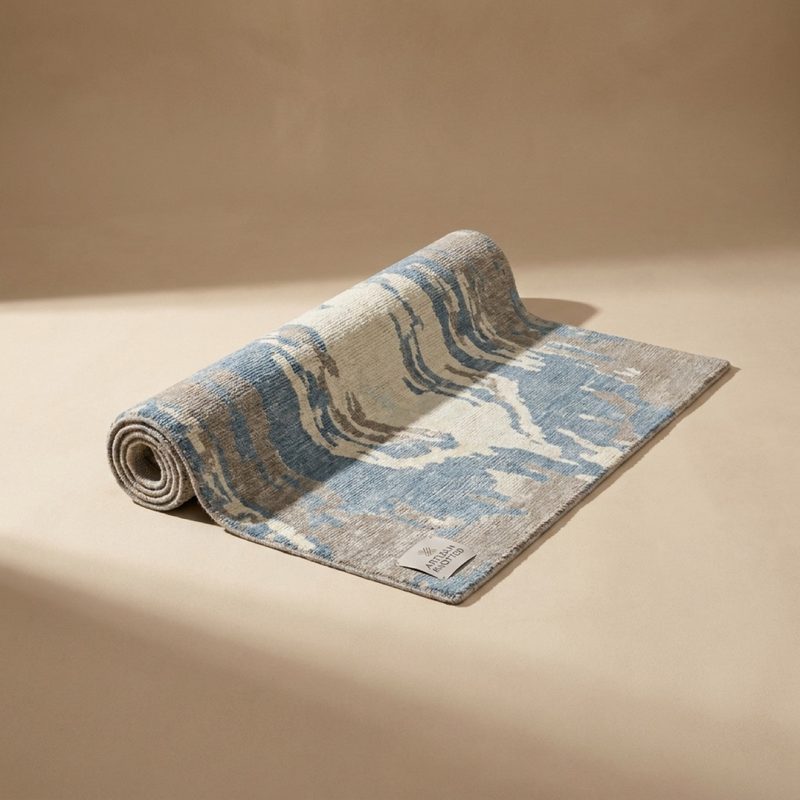
Modern kitchen rugs and contemporary kitchen rugs tend to share a few consistent traits that set them apart from a more traditional design. Clean lines, restrained color palettes, and patterns confident enough to stay simple rather than over-explain themselves - that's the general language of a modern kitchen rug, and it suits the clean-surfaced, functional feel most modern kitchens are already built around.
A modern kitchen carpet in a solid tone or a subtle geometric repeat tends to work especially well against the stainless steel, quartz, and matte cabinetry common in contemporary kitchen design. Where a heavily patterned traditional rug can compete visually with an already busy kitchen - tile backsplash, open shelving, hanging pots - a more restrained modern design tends to sit more comfortably in the room rather than adding to the visual noise.
Color choice deserves a specific mention within the modern kitchen aesthetic. Warm neutrals and soft grays remain the most versatile starting point, since they pair easily with almost any existing cabinetry or countertop color without forcing a redesign around them. For kitchens with predominantly white or light surfaces, a slightly deeper tone underfoot - charcoal, navy, or a warm terracotta - adds genuine visual grounding without straying from that clean, contemporary feel. It's worth a glance at our best-selling rugs on sale too, since modern, solid-toned designs like these occasionally turn up there at a friendlier price.
Runners Are the Classic Kitchen Choice, and for Good Reason
Most kitchens are narrow, working spaces rather than open rooms, which is exactly why modern kitchen runner rugs tend to be the most practical shape here - sized to sit in front of a sink, stove, or counter workspace without covering the whole floor.
A modern kitchen rug runner in a low, tight construction handles this role especially well. It sweeps clean easily, doesn't bunch or shift the way a bulkier rug might in a narrow walkway, and its elongated shape naturally suits the galley-style layout most kitchens are built around. If your kitchen has one clear central walkway between counters, a single well-chosen runner usually serves better than trying to fit a standard rectangular rug into a space it wasn't proportioned for.
A runner also does quiet, practical work beyond the main walkway. Placed lengthwise along a run of cabinets, it can define a whole prep-and-cook zone the same way a rug anchors a seating group in a living room - giving the space a sense of being finished rather than simply walked across.
Sizing a Kitchen Rug
Kitchen rugs tend to follow different sizing logic than a living room or bedroom, since the goal is usually covering a specific work zone rather than filling the whole floor. A runner in front of the sink or stove is the most common approach; a slightly larger rug can work well in an eat-in kitchen nook, sized more like a small dining space than a full room.
A Few Honest Questions We Hear Often
Is a washable kitchen rug always the better choice? Not necessarily - it depends on your priorities. A washable rug offers genuine convenience for a busy household, but a well-made rug with the right pile and material can be spot-cleaned effectively without needing a full wash. Both are legitimate choices depending on how your household actually uses the space.
Should I put a rug directly in front of the sink, where it's likely to get wet often? Yes, that's actually one of the most common and useful placements - just lean toward a lower-pile, quicker-drying design in that specific spot, and make sure it has a non-slip backing given how often that area gets damp.
Do modern kitchen rugs work in an older or more traditional kitchen, or only a genuinely modern one? They work in both, more often than people expect. A clean-lined modern kitchen carpet can actually provide a nice contrast in a more traditional kitchen, softening the formality of the room without fighting it, the same way a simple accent piece can freshen up an otherwise classic space.
How many rugs does a typical kitchen actually need? Often more than one. A runner in front of the sink or stove handles the highest-traffic zone, while a smaller accent piece near a breakfast nook or island seating area can add warmth without covering the whole floor. Thinking in zones, rather than trying to find one piece to cover everything, tends to produce a more functional result.
Bring Style Into Your Kitchen
Every kitchen rug we make spans the styles and constructions covered in this guide, from modern runners to more traditional patterns, all built for exactly this kind of daily, hardworking use. Every order ships free, dispatched in 24 hours, with 30 days to make sure the rug earns its place in your kitchen before you decide it's staying.
Curious about other rooms, shapes, or styles? Our full library of rug guides covers everything from sizing to construction. And if you're still not sure which rug is right for your specific kitchen, our team is a message away - real people who can help you land on the right piece before you buy, not after.
A good kitchen rug shouldn't ask you to choose between beautiful and practical. The right one gives you both, every single day.
Keep reading


Find your perfect handmade rug
Over a thousand hand-knotted wool, silk and jute rugs — shipped free across the US, with free 30-day returns.
Shop all rugs